
Consumer Unit Upgrade: The Complete Homeowner’s Guide
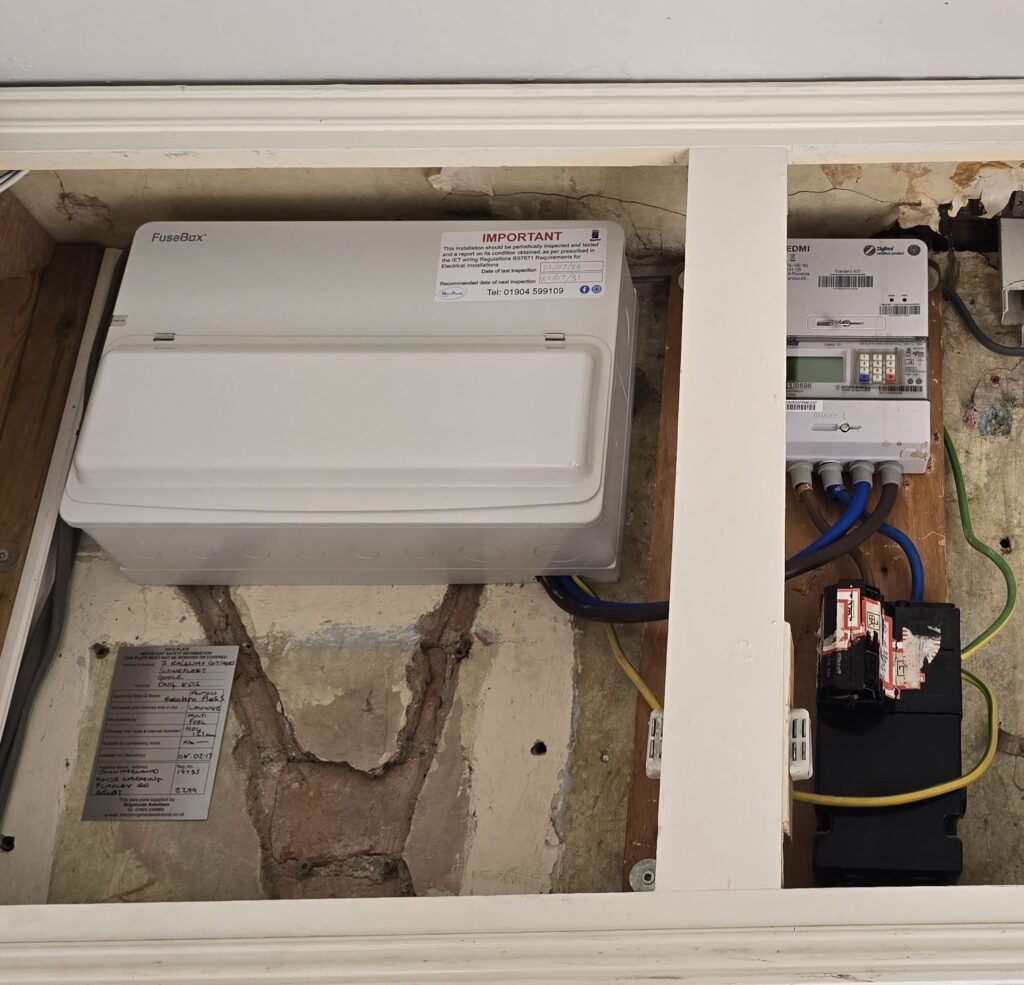
Everything you need to know about consumer unit upgrades — what they cost, how long they take, signs you need one, and why it matters. From a NAPIT-registered electrician in Yorkshire.
Why I Include Fire Suppression in My Consumer Unit Upgrades
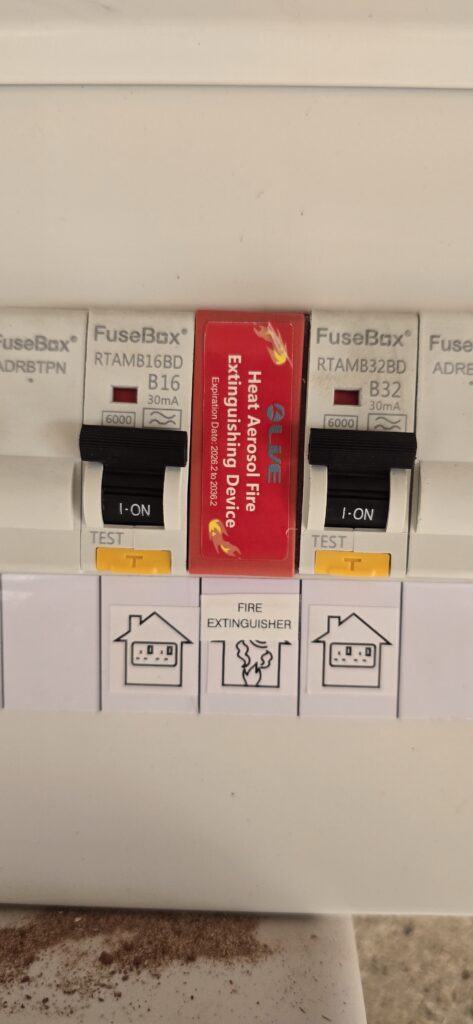
Why I Include Fire Suppression in My Consumer Unit Upgrades If you’ve received an email from me about the NextPhase Home Protection Package, you might be wondering what the automatic fire suppression device actually is. That’s understandable. It’s not something most homeowners will have seen before, and it’s not something fitted inside every consumer unit. The simple answer is that it’s an additional layer of protection fitted inside the consumer unit, designed to activate automatically if a fire develops within the enclosure. I think it’s a sensible addition to a modern consumer unit installation, which is why I’ve chosen to include one as part of my Home Protection Package. Here’s what you need to know. What Is a Consumer Unit Fire Suppression Device? The device I use is a compact automatic fire suppression unit designed to be installed inside the consumer unit. It sits alongside the electrical protective devices inside the enclosure and requires no action from the homeowner if it is ever needed. If a fire develops inside the consumer unit and the conditions required to activate the device are reached, it automatically releases its fire suppression agent within the enclosure. The important point is that this is an additional layer of protection. It does not replace the electrical protective devices inside the consumer unit, correct installation practices, inspection and testing, or suitable smoke detection within the home. Hopefully, it will sit inside the consumer unit for its entire service life and never be needed. But if something does go seriously wrong inside the enclosure, there is an additional protective measure in place. Why Could a Fire Start Inside a Consumer Unit? A correctly designed, installed and tested modern consumer unit should provide a high level of electrical protection. However, electrical installations can develop faults. Problems such as loose or deteriorated connections, damaged equipment, poor previous workmanship and other electrical faults can generate excessive heat. The protective devices inside a modern consumer unit are designed to disconnect the electricity supply when certain types of faults occur. However, no single product or protective measure should be treated as the answer to every possible fault. That’s why I believe in using layers of protection. Why Do I Include One in the NextPhase Home Protection Package? When I put together the NextPhase Home Protection Package, I asked myself a simple question. If I was upgrading the consumer unit in my own home, what would I want installed? I would want a modern consumer unit upgrade with individual RCBO protection, surge protection, proper testing and certification, installed to a standard I’d be happy to have protecting my own home. But I also like the idea of adding sensible additional protection where I believe it offers genuine value. That’s where the automatic fire suppression device comes in. I’ve chosen to include it because I believe it is a worthwhile additional layer of protection. The cost of adding one during a consumer unit upgrade is relatively small compared with the overall installation, and it can be fitted neatly within the consumer unit as part of the original specification. For me, it makes sense. Does It Replace RCBOs or Surge Protection? No. This is important. An automatic fire suppression device should never be used as a substitute for correctly selected protective devices or good workmanship. The consumer units I install use individual RCBO protection for the circuits and include surge protection. The installation is inspected, tested and certificated on completion. The fire suppression device sits on top of those measures as an additional layer of protection. Think of it as part of a wider approach to electrical safety rather than a replacement for anything else. Is Consumer Unit Fire Suppression Required by the Wiring Regulations? No. Automatic fire suppression devices inside domestic consumer units are not currently a general requirement of BS 7671. They are an optional additional protective measure. I think it’s important to be clear about that. I’m not fitting these devices because the regulations require me to. I’ve chosen to include them because I believe they add something worthwhile to the finished installation. Can a Fire Suppression Device Be Added to My Existing Consumer Unit? Possibly. Whether one can be added to an existing consumer unit will depend on the type, condition and configuration of the equipment already installed, along with the requirements of the specific fire suppression device. I wouldn’t recommend fitting one blindly without first looking at the existing installation. If you have an older fuseboard with rewireable fuses, limited RCD protection or other outdated equipment, it may be more sensible to look at the overall condition and protection provided by the installation rather than simply adding another device. If you’re unsure, send me a clear photo of your existing fuseboard and I’ll give you my honest opinion. Frequently Asked Questions Will the device activate during normal use? The device is designed to remain inactive during the normal operation of the consumer unit and only activate when its specified activation conditions are reached. The exact activation method and operating characteristics depend on the particular device installed. Does having one mean my consumer unit cannot catch fire? No. No responsible electrician should promise that a single product can eliminate every electrical fire risk. The device provides an additional layer of protection. Good design, correct installation, suitable protective devices, proper testing and ongoing maintenance remain important. Does every home need a consumer unit fire suppression device? Not necessarily. Many homes already have modern consumer units providing a high level of protection. I include the device in my Home Protection Package because I believe it’s a worthwhile addition when carrying out a new consumer unit installation. That doesn’t mean I would recommend replacing an otherwise satisfactory consumer unit simply to have one fitted. How do I know whether my fuseboard needs upgrading? The easiest first step is to send me a clear photo. In many cases, I can give you an initial indication of the age and type of equipment installed and whether
Single Phase vs Three Phase EV Charger at Home: Which Do You Need?
When people talk about EV charger options, the term “three phase” comes up. Some installers talk about it like it’s a big decision. Here’s the honest truth: if you live in a normal house, you need single phase. For 99% of homeowners, that question is already answered. What’s the Difference Between Single Phase and Three Phase? Electricity is delivered to your home through different systems. Single phase is the standard domestic supply in the UK. It’s 230 volts. That’s what comes through your meter to your consumer unit. Three phase is 400 volts. It’s actually three separate power supplies working together. It’s common in factories, large commercial buildings, and industrial sites. It’s very rare in homes. Single Phase Chargers: What You Can Get A single phase EV charger typically delivers between 3.6kW and 7.4kW. Most domestic chargers are 7kW. That’s a perfectly adequate speed. A 7kW charger will charge most modern electric cars overnight. A Tesla Model 3, for example, will add about 25 to 30 miles of range per hour of charging. Most people don’t drive 200 miles a day. You’ll plug in overnight, wake up with a full battery, and that’s your daily range sorted. Some people think 7kW is slow. It isn’t. It’s plenty for home use. It’s safe, it’s efficient, and it works reliably. You’re not waiting hours for a full charge. You’re sleeping while your car charges. Three Phase Chargers: When They Exist in Homes Three phase chargers deliver up to 22kW. They’re faster. A 22kW charger will charge the same Tesla Model 3 in roughly a third of the time. But here’s the crucial bit: if you don’t have a three phase supply, you can’t use a three phase charger. Full stop. It’s not an option. Do you have a three phase supply at home? Almost certainly not. Look at your electricity meter. If you see three separate components or three measuring dials, you might have three phase. Most UK homes have a single dial. That’s single phase. You can ask your energy supplier or your Distribution Network Operator (DNO) to install three phase. It’s possible. But it’s expensive. We’re talking several thousand pounds, sometimes running into five figures depending on how far the supply has to come and how much work is involved. The Reality Check I’ve been installing EV chargers for years. I’ve never had a homeowner say, “I want three phase.” I’ve had plenty of people ask if they can get three phase. The answer is usually: yes, technically, but the cost doesn’t justify it. The speed difference between 7kW and 22kW only matters if you’re charging multiple times a day or if you absolutely must charge your car from empty in under an hour. Most people aren’t doing that. How to Check What You Have If you’re curious about your supply, look at your meter. Is there one number dial or three? If it’s one, you’re single phase. You can also contact your DNO directly. Your DNO is the company that manages the cables in your area. Your electricity supplier can tell you who that is. The DNO can confirm your supply type and quote you for an upgrade if you want to explore it. Your electrician can also check during the survey for your EV charger. I always confirm supply type as part of my assessment. What I Recommend For a home EV charger, single phase at 7kW is exactly what you need. It’s safe, reliable, cost-effective, and will charge your car perfectly well overnight. If you do somehow have a three phase supply, and you want to take advantage of it for a faster charger, that’s great. But I wouldn’t recommend paying thousands to install three phase just for the sake of it. The Bottom Line You almost certainly need a single phase charger. It will work brilliantly for your needs. It will charge your car reliably. You can drive off in the morning with a full battery. That’s what matters. Ready to discuss your EV charger options? Give me a call on 01904 599109. I’ll assess your property, confirm your supply, and recommend the right setup for your needs. I’m NAPIT registered, Which? Trusted Trader, DBS checked, and rated 5 stars on Google. For full details on EV charger installation, visit my EV charger installation service page.
What to Expect During an EICR: Your Questions Answered
An EICR sounds official and technical. The full name is Electrical Installation Condition Report. But what does it actually involve? What will an electrician be doing in your home, how long does it take, and what do all those codes mean when you get the report? Let me walk you through the whole process. What Does EICR Stand For and Why Do You Need One? EICR is the standard safety inspection for existing electrical installations. It’s not about upgrading your system. It’s about checking that everything installed is safe, compliant, and working properly. Landlords are legally required to get an EICR every 5 years if they’re letting properties. Homeowners aren’t legally required to, but it’s recommended every 10 years. And if you’re buying or selling a property, a surveyor might recommend one. It’s also crucial before major work like an EV charger installation or kitchen rewire. How Long Does It Take? For an average three bedroom home, an EICR takes between 2 and 4 hours. A smaller property might be done in 1.5 hours. A larger house or one with complex wiring could take longer. The electrician isn’t working the whole time on visible stuff. Some of that time is testing circuits, checking connections, documenting everything, and writing up the report. It’s thorough work, not rushed. What the Electrician Actually Checks When I carry out an EICR, I’m checking every circuit in your home. I’m looking at your consumer unit, all the wiring, all the outlets and switches, any hardwired appliances. I’m testing for earth faults, insulation resistance, and continuity. I’m looking for damage, deterioration, signs of overheating, or anything that doesn’t meet current standards. I’ll check your earthing arrangements, your RCD protection, and whether everything is properly labelled. I’m making sure nothing’s a danger. It’s methodical. I’ll visit every room, open switch plates, check concealed wiring where I can access it, and test circuits. I might ask you questions about how the property’s used, any problems you’ve noticed, or any recent work that’s been done. The Report Codes Explained When you get your EICR report, circuits get coded based on what was found. C1: Danger Present. This means something is an immediate safety risk. It could be exposed live parts, faulty earth arrangements, or something else that could cause electric shock or fire. This needs fixing now. Not tomorrow, not next week. Now. C2: Potentially Dangerous. This is something that’s not immediately dangerous but could become so. It might be deterioration that’s progressing, or a condition that could become unsafe. This needs addressing fairly urgently, typically within a month. C3: Improvement Recommended. This isn’t a safety issue but it’s not meeting modern standards. Maybe there’s no RCD protection on a particular circuit, or the labelling isn’t clear, or it doesn’t align with 18th Edition regulations. You should fix this, but it’s not an emergency. FI: Further Investigation. Sometimes I can’t fully assess something without doing more work, maybe removing parts of the installation. If I code something FI, I’m saying more investigation is needed before I can give you a definite answer. What If You’ve Got a C1 or C2? If something’s coded C1, don’t use that circuit until it’s fixed. It’s a genuine safety risk. If there are C2 items, contact a qualified electrician within a month and get them sorted. These are often issues like missing bonding, outdated RCD arrangements, or deteriorating cables. The Certificate You Get The report is a legal document. It’s a record of the condition of your installation on that date. If there’s ever a problem, and someone asks whether the installation was safe, your EICR report is evidence. Keep it. If you’re renting the property, you legally have to provide it to tenants. If you’re selling, it’s valuable to show a buyer that the installation has been professionally checked. Cost An EICR for an average home is typically £150 to £350 depending on the size and complexity. It’s a modest investment for the peace of mind and the legal record it provides. Ready to Book? If you need an EICR, call me on 01904 599109. I’m NAPIT registered, Which? Trusted Trader, DBS checked, and rated 5 stars on Google. I’ll give you a fixed quote upfront, complete the inspection thoroughly, and provide you with a clear, jargon-free report. For full details, visit my electrical reports service page.
Signs Your Fuse Board Needs Replacing: A Homeowner’s Guide
Your fuse board is the heart of your home’s electrical system. Every circuit in your house is controlled from there. If it’s old, outdated, or damaged, it’s a genuine safety issue. I’ve been into a lot of homes over the years, and I can usually tell within a minute whether a board needs replacing. Here are the real warning signs. Rewireable Fuses Are a Red Flag If you open your fuse box and see ceramic holders with what looks like bits of wire in them, that’s a rewireable fuse system. You probably have fuse wire running through those holders. When a circuit overloads, the wire melts and breaks the circuit. The problem is, anyone can replace that wire. There’s no safety standard to it. I’ve seen homes where people have replaced a fuse wire with thicker wire, or even a nail, to bypass the safety mechanism. That defeats the entire purpose of a fuse. It’s a genuine fire risk. If your board uses rewireable fuses, it needs replacing. Full stop. This is the most common reason I recommend a board upgrade to homeowners. The Age Test How old is your board? If it’s from the 1970s, 1980s, or 1990s, and especially if it’s plastic with metal or ceramic components, it’s coming to the end of its life. Electrical components deteriorate over time. Plastic becomes brittle. Connections corrode. A board that’s 30, 40, or 50 years old has done its job, but it’s time for an upgrade. Modern boards last 25 to 30 years with proper maintenance. If yours is older than that, budget for a replacement. No RCD Protection RCD stands for Residual Current Device. It’s a safety device that cuts power instantly if it detects a fault. It protects you from electric shock. If your board has no RCD protection, or if you’ve only got one RCD protecting the whole board, that’s outdated. Modern standards require RCD protection on specific circuits, and most circuits should be protected individually. If your board is old enough not to have RCD protection, it needs upgrading. Frequent Tripping or Resetting If you’re constantly resetting your board, or if circuits keep tripping, something’s wrong. It might be a faulty appliance, it might be an overloaded circuit, or it might be an aged board struggling to cope with modern electrical demands. A tripping board is trying to tell you something. Don’t just keep resetting it. Have it checked. If it’s an old board and you’re adding new circuits for an EV charger or extension, this is a signal it’s time to upgrade. Scorch Marks or Burning Smell This is urgent. If you see blackening, scorch marks, or burning on the board, or if you can smell something burning near it, turn off power at your main switch and call an electrician immediately. Don’t delay on this. Charring means there’s been an electrical fault, arcing, or overheating. Your board is unsafe. You’re Planning Major Work If you’re installing an EV charger, adding an extension, rewiring a kitchen, or doing anything that requires new circuits, it’s worth checking your board capacity. If you’ve got an old board with no spare circuits and no way to upgrade safely, you need a new board before you can add new work. An EV charger draws serious power. A 7kW single phase charger needs its own dedicated circuit. If your board doesn’t have the capacity or the right protection, you need an upgrade. What a Modern Board Includes A modern replacement board includes RCDs (residual current protection) and RCBOs (combined circuit protection). It’s compliant with 18th Edition wiring regulations. It’s got room for future circuits. The layout is clear and sensible. It’s safer, more reliable, and built to last. The cost is typically £400 to £900 depending on the complexity and your location. Yes, it’s an investment. But an old board is a genuine risk. Insurance can be affected if something goes wrong. What You Should Do If any of these signs apply to you, get a qualified electrician to assess your board. I offer electrical reports and safety inspections specifically for this reason. NAPIT registration means the work is certified and insurable. Don’t ignore an old or damaged board. It’s not something that gets better with age. Ready to get your board checked? Call me on 01904 599109. I’m NAPIT registered, Which? Trusted Trader, DBS checked, and 5 stars on Google. I can assess your board, explain what you actually need, and give you a fixed quote. For full details on fuse board upgrades, visit my fuse board upgrade service page.
EV Charger Grants UK 2026: What Is Still Available?
I’m going to be honest with you straight away: if you’re looking for the domestic EV charger grant that used to pay for half your installation, that ship has sailed. But that doesn’t mean there’s nothing available. Let me break down what grants actually exist in 2026 and who qualifies. The OZEV Scheme That Ended The Electric Vehicle Homecharge Scheme, or OZEV, provided up to £350 towards the cost of a home EV charger installation for eligible homeowners. It was a good scheme while it lasted. It ended in March 2022. That’s four years ago now. I mention this because I still see articles online and even some installers referencing OZEV as though it’s still available. It’s not. Don’t waste your time applying. The confusion around this grant persists, and I want to be clear: if you’re a homeowner installing an EV charger for personal use, there’s no government grant funding the installation itself right now. What IS Still Available There are genuine schemes for specific groups, though, so don’t give up yet. The Workplace Charging Scheme is still open. If you’re a business or organisation and you want to install chargers for your employees, you can get up to £350 per socket. This is for workplaces, office car parks, industrial sites, that kind of thing. It’s funded and live. The EV Infrastructure Grant is available for larger projects. If you’re a landlord with multiple properties and want to install chargers in communal car parks, or if you’re managing a residential building, you can apply for support. This is also aimed at commercial properties and public charging infrastructure. The amounts available are different, and the application process is more involved. Disabled drivers might have access to grants through the Motability scheme or your local council. If you’re a disabled driver, it’s worth checking what your local authority offers. Some councils still have dedicated EV grant schemes. Check Your Local Council This is genuinely important. Some local councils have top-up schemes or dedicated funding for EV infrastructure. It varies by region. If you’re in North Yorkshire, York, or surrounding areas, it’s worth a quick phone call to your local council to ask if they’ve got anything available. Some areas are pushing EV adoption harder than others and have invested accordingly. Why This Matters I’ve seen homeowners spend months trying to apply for grants that don’t exist. I’ve had people come to me frustrated because an installer promised them a grant that isn’t available. It’s confusing, and it’s frustrating. The truth is, EV charger installation is an investment. For a single phase, 7kW home charger, a straightforward installation is typically between £1200 and £2000 depending on the complexity and your location. It’s a genuine cost, and there’s no magic grant to cover it for most homeowners in 2026. But it’s also an investment that adds value. You’re future-proofing your home. You’re reducing your dependence on public charging infrastructure. You’re bringing the cost of charging your car down significantly compared to using a public rapid charger. What I Recommend If you’re a homeowner wanting an EV charger, don’t bank on a grant. Budget for the full cost. Then, if something becomes available, it’s a bonus. If you’re a business, landlord, or part of an organisation, absolutely explore the Workplace Charging Scheme or EV Infrastructure Grant. For disabled drivers, contact your local authority and the Motability scheme directly. Get quotes from installers who are NAPIT registered and accredited. That ensures they’re qualified and the work is insurable. I can provide you with a fixed quote, timeline, and all the paperwork you need. Ready to move forward? Give me a call on 01904 599109. I’m happy to discuss your specific situation, answer questions about what’s genuinely available, and give you a straight answer on cost. No surprises, no misleading grant talk. For full details, visit my EV charger installation service page.
How Long Does EV Charger Installation Take?
One of the questions I get asked most often is: “How long will the installation actually take?” It’s a fair question. You need to plan your day, arrange time off work, or make sure someone’s home. So let me walk you through what a typical EV charger installation looks like from start to finish. The Standard Timeline For most homes, a straightforward EV charger installation takes between 2 and 4 hours. That’s your arrival time to the moment I hand over the keys and show you how to use it. It’s not a full day job for standard installations. What Happens During the Installation When I arrive, the first thing I do is a proper survey of your property. Where’s your car going to park? How far is that from your consumer unit? Are there obstacles, walls, or pipework I need to work around? I check your electrical supply, confirm it can handle the charger, and plan the best cable route. This takes about 30 minutes. Next comes the cable routing. Whether that’s running cable under the ground, along the side of your house, or through conduit on the exterior, I get it in place safely and in compliance with building regulations. For a straightforward run to a garage or driveway, this is quick. For longer distances, it takes more time. Then I mount the charger itself. The unit goes on your wall in the location we’ve agreed. I make sure it’s level, secure, and all the connections are made properly inside. I connect it to your home electrics, which means working at your consumer unit to run a new circuit if needed. Modern chargers integrate cleanly, and this part usually takes 45 minutes to an hour. Once it’s all connected, I commission the charger. That means powering it up, running through its diagnostics, and testing it with your car to make sure everything works. This is crucial. You need to know it’s safe and it’s going to charge your vehicle reliably. Finally, I tidy up my work. There’s paperwork to complete, safety certificates to hand over, and I always take time to show you how to use the charger, answer questions, and leave you confident with your new equipment. What Can Add Time Some installations take longer. If you’ve got a long cable run, especially if that means burying cable or running it through ducting, that adds time. If your consumer unit doesn’t have spare capacity, I might need to upgrade your board or add a new circuit. That’s a bigger job. If your house is a Victorian terraced with solid walls, or you want the charger in an awkward location, routing becomes more complex. Distance from the house to the parking spot is a real factor too. A charger going on the side of the garage where you park is quick. A charger that needs 30 metres of underground cable to reach a parking area further down the drive changes the timeline significantly. What You Should Do to Prepare Make sure someone’s home for the full duration. You don’t need to be in the room the whole time, but I’ll need access to your consumer unit and the parking area. If you’re planning upgrades at the same time, like a new driveway or extended parking, let me know in advance so I can plan around that. Have your car there for testing. I want to confirm the charger works with your specific vehicle. Let me know if there’s anywhere the cable run needs to avoid. If you have underground services marked out, show me those maps. The Real Picture Most standard installations are absolutely fine in a morning or early afternoon. You’ll go from no charger to a fully working, certified charging point in one visit. It’s a straightforward job when everything is straightforward. If there are complications, I’ll let you know in the survey. I won’t start work and then surprise you with additional time. That’s not fair on anyone. Ready to get your EV charger installed? Give me a call on 01904 599109 and we’ll arrange a survey. I’m NAPIT registered, a Which? Trusted Trader, DBS checked, and rated 5 stars on Google. You’re in safe hands. For full details on EV charger installation options and pricing, visit my EV charger installation service page.
Is It Worth Getting a Home EV Charger?
If you’ve just bought an electric car, you might be wondering whether a home EV charger is actually worth the expense. Let me walk you through the practical reality. The Quick Answer: Yes, for Most EV Owners But the actual answer depends on how you drive and how often you charge. Three-Pin Charging vs a Dedicated Charger When you buy an electric car, it comes with a three-pin cable that plugs into a standard household socket. It works, technically, but it’s slow. Charging from empty takes 24 to 48 hours depending on your car’s battery size. That’s awkward if you want to use your car daily. A dedicated home EV charger typically runs at 7kW or 11kW. With a 7kW charger, you can add 30 miles of range in an hour. With 11kW, it’s faster. You can charge from nearly empty to full overnight for your daily commute. The difference in convenience is massive. The Charger Itself Is Safer The three-pin cable isn’t designed for the continuous heavy load that EV charging creates. Repeatedly using it puts strain on the socket, the cable, and your house wiring. A dedicated charger is designed for the job. It’s safer and puts less stress on your home electrics. Smart Charging Saves Money Modern chargers like Zappi, Hypervolt, and Ohme are smart. They can integrate with cheap-rate energy tariffs that offer lower electricity prices at certain times, usually late evening or overnight. If you charge during these windows, you’re charging your car at a fraction of the cost of daytime electricity. For someone driving 10,000 miles a year, this alone could save £100 to £200 annually. If you have solar panels, a smart charger can use excess solar energy to charge your car for free. That’s powerful savings if you drive a lot. The Convenience Factor Knowing your car is fully charged every morning without you having to think about it is genuinely valuable. You never run out of charge. You never have to plan around charging time. You just plug in when you park, and it’s ready to go. When a Home Charger Might Not Be Worth It If you rarely drive, maybe a home charger isn’t essential. If you do 2,000 miles a year, you might get by charging occasionally at public chargers. If you have free workplace charging and you’re always charging there, you might not need a home charger. But I’d still recommend one for backup and convenience. If you live in an apartment or flat without dedicated parking, a home charger isn’t feasible. You’ll rely on public infrastructure. The Cost vs Savings A home EV charger installation typically costs £800 to £1,500 depending on your setup. Some homes need a fuse board upgrade, which adds cost. The savings come from cheap-rate electricity if you use a smart tariff (typical saving is £100 to £200 per year for moderate drivers), solar charging if you have panels (this could save £200 to £400 annually depending on your driving and solar capacity), and the convenience value of not needing to visit public chargers or plan your time around charging. If you drive 15,000 miles or more per year, the cost of installation is recouped within a few years through electricity savings alone. If you drive less, it takes longer but you still get the convenience benefit. My Honest Take If you’ve bought an EV and you have somewhere to install a charger, get one. The convenience is worth the cost. The savings on electricity justify it if you drive a reasonable annual mileage. The safety and reliability are better than alternatives. The only exceptions are if your driving pattern is genuinely unusual or your circumstances (apartment living, no parking) make a home charger impossible. Getting It Done Properly Make sure whoever installs your charger is NAPIT or NICEIC registered. It’s a notifiable installation and it needs to be done right. I’ve seen bad installations and they create problems. I install EV chargers throughout Selby, York, Goole, and surrounding areas. If you’ve got an electric car and you’re thinking about a home charger, get in touch. Ring 01904 599109 or visit my contact page. I’ll survey your property, advise on the best charger for you, and give you a fixed-price quote for installation. For full details on charger options and pricing, visit my EV charger installation page.
Can Any Electrician Install an EV Charger? What You Actually Need to Check
Short answer: no, they can’t. Not legally. I’m writing this because I’ve found properties with EV chargers installed by people who aren’t qualified to do so. It’s not safe and it creates real problems for the homeowner. Let me explain what you need to check and why it matters. The Legal Requirement: Part P and Building Regulations In England, electrical work in homes falls under Part P of the Building Regulations. EV charger installation is notifiable electrical work, which means it has to be done by someone registered with an approved competent person scheme. The main schemes are NAPIT, NICEIC, and ELECSA. I’m registered with NAPIT. When I install an EV charger, I’m inspected by NAPIT, and I issue a certificate that proves the work meets Building Regulations. If you use an electrician who isn’t registered with one of these schemes, there’s no certification, no inspection, and no legal compliance. You’ve just got an EV charger installed by someone who might or might not know what they’re doing. Why This Matters: The Real Risks If you get an unqualified installation and something goes wrong, you’ve got several problems. Your building insurance might not cover damage caused by the installation. If there’s a fire, electrocution, or damage to the house, your insurer could refuse the claim because the work wasn’t done to approved standards. When you sell the house, you’ll need to disclose that electrical work was done without certification. You might need to pay for a qualified electrician to retrofit a certificate or redo the work. This can cost hundreds of pounds. If the charger malfunctions or damages your car, the charger manufacturer’s warranty might be void because the installation wasn’t certified. There’s a genuine safety risk. Improper installation can cause electrocution, fire, or damage to the home electrical system. What to Ask Before Hiring an Electrician Before you book anyone to install an EV charger, ask these questions: Are you registered with NAPIT, NICEIC, or ELECSA? If the answer is no, don’t use them. Will you provide a Building Regulations certificate on completion? If the answer is no, don’t use them. What’s your experience with EV charger installation? You want someone who’s installed chargers before, not someone doing it for the first time. Can you provide references or examples of previous installations? Legitimate installers can. The Honest Picture A lot of ordinary electricians aren’t registered with a competent person scheme. They might do general electrical work, rewiring, fault-finding, general repairs, and they’re fine. But they can’t legally do notifiable work like EV charger installation. Some unregistered electricians will install chargers anyway because it’s paid work. Some probably don’t realise the legal requirement. Either way, you’re taking a risk. My Position I’m NAPIT registered. Every charger I install is inspected and certified. You get a building regulations certificate, you get a warranty, you get insurance compliance, you get peace of mind. It costs a bit more than getting someone unqualified, but it protects you and your home. Bottom Line Don’t be tempted by an electrician who quotes less because they’re unqualified. It’s a false economy. The risks aren’t worth it. I install EV chargers throughout Selby, York, Goole, and surrounding areas. I’m NAPIT registered, Which? Trusted Trader, DBS checked, and rated 5-star on Google. If you want a qualified, certified installation you can trust, call me on 01904 599109. For full details on my EV charger installation service, visit my EV charger installation page.
How Much Does an EV Charger Cost to Install in 2026?
I’ve noticed a lot of outdated pricing information online for EV charger installation. Some articles are still referencing the OZEV grant, which ended in March 2024. Some quotes are three years old. If you’re trying to figure out what an EV charger will actually cost in 2026, here’s what you’re genuinely looking at. The Honest Breakdown An EV charger installation has several cost components. Let me walk through each one. The Charger Unit Itself: £400 to £900 This is the actual charge point. Your choice of Zappi, Hypervolt, Ohme, or another brand determines this price. Budget around £400 to £600 for a basic reliable option, £600 to £800 for mid-range, £800 to £900 for the more feature-rich brands. Installation Labour: £200 to £400 This covers the electrician’s time to install the unit, test it, and provide certification. A straightforward installation where the charger can go near the board and the cables run neatly takes less time than a job where cables need to run 40 metres around the house. Cable Run and Fixings: £50 to £300 If your charger location is next to your fuse board, the cable run is short and cheap. If it’s on the opposite side of the house, you might need to lift floorboards, run cables through walls, or surface-mount them. This affects cost. Budget £50 for a short run, £100 to £200 for a moderate run, £300 for a long or complex run. Fuse Board Upgrade If Needed: £500 to £1,200 This is the big variable. If your board has a spare 32-amp way and it’s in good condition, you don’t need an upgrade and this cost is zero. If you need a new consumer unit, budget £500 to £1,200 depending on the existing setup and any complications. Testing and Certification: £50 to £100 All installations need to be tested and you need a certificate of completion and Building Regulations notification. This is included in the labour cost above in most cases. Typical Total Costs Most homes without a board upgrade: £800 to £1,300 total. Homes needing a board upgrade: £1,400 to £2,000 total. The most common scenario I see is around £1,000 to £1,200 installed including everything. What Makes It Cheaper vs More Expensive Cheaper scenarios: modern board already in place, spare capacity available, charger location near the board, straightforward cable run, no complications. More expensive scenarios: board upgrade needed, charger location far from board, cable run across multiple rooms or through external walls, existing wiring issues that need addressing, solid concrete floors that cables need to go under. What You Shouldn’t Do Don’t use an unqualified electrician to save money. I know this sounds self-interested, but it’s genuinely important. An unqualified installation means no insurance cover if something goes wrong, no Building Regulations certificate (which creates problems when you sell the house), safety risks, and your charger warranty may be void if the installation isn’t certified. How to Get an Accurate Quote The only way to know the real cost for your property is to have a survey done. I survey every job before quoting. I can then tell you exactly what you need, what it will cost, and what the timeline is. I operate throughout Selby, York, Goole, and surrounding areas. If you want a fixed-price quote for EV charger installation at your property, call me on 01904 599109. I’ll arrange a survey and give you a clear quote with no surprises. For full details on charger options and the installation process, visit my EV charger installation page.