
An EICR is marked either satisfactory or unsatisfactory. A C1 (danger present) or a C2 (potentially dangerous) makes it unsatisfactory, and so does an FI (further investigation needed). A C3 is a recommendation and does not fail the report on its own. If you are a landlord in England, C1 and C2 items must be put right, and FI items investigated, within 28 days, or sooner if the report says so.
That is the short version. Here is what each code actually means, what it looks like in a real house, and what to do next.
The four codes at a glance
| Code | What it means | Does it make the report unsatisfactory? | What usually happens next |
|---|---|---|---|
| C1 | Danger present. Risk of injury | Yes | Made safe straight away, often before the inspector leaves, then properly repaired |
| C2 | Potentially dangerous | Yes | Repaired. For landlords, within 28 days or sooner if the report says |
| FI | Further investigation required without delay | Yes | Someone goes back and finds out what is going on |
| C3 | Improvement recommended | No | Worth considering, but not required |
The code is the inspector’s judgement about the risk, using industry guidance. The same thing can be coded differently in different situations, which is why two reports on similar houses do not always match.
C1: danger present
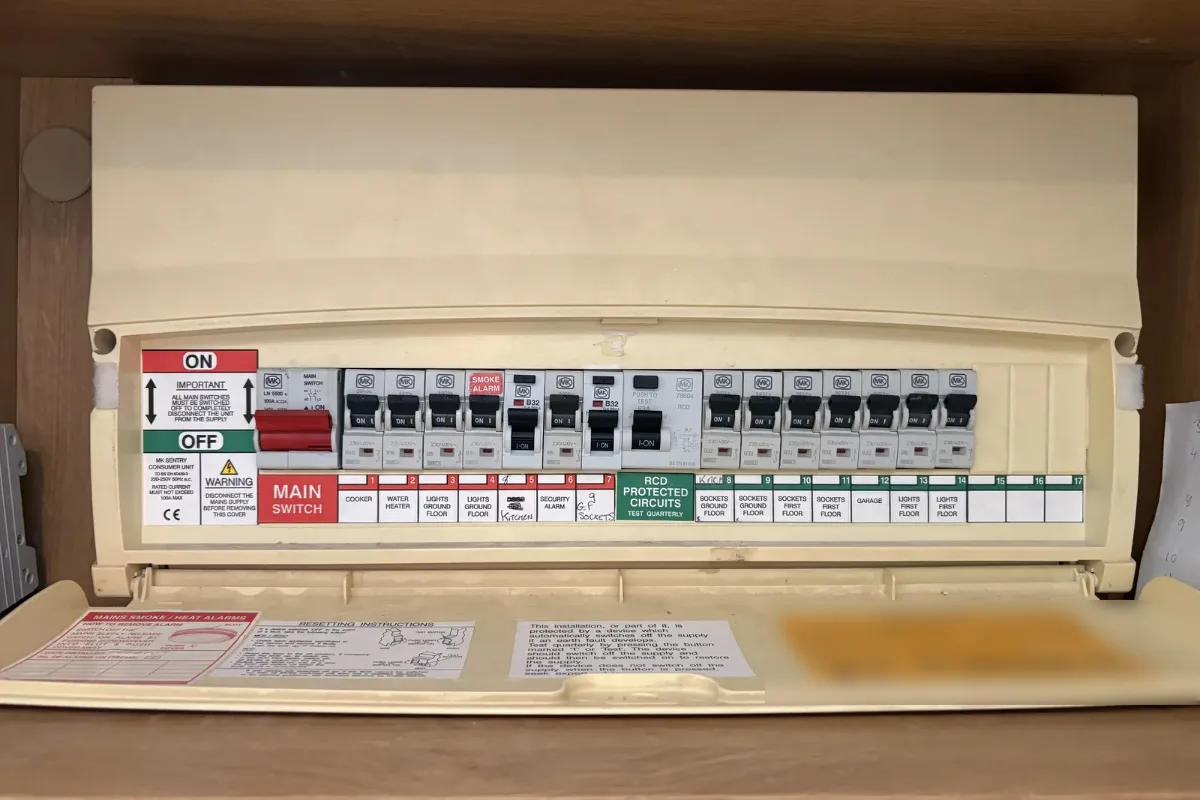
A C1 means someone could be hurt now. Typical examples are live parts that can be touched, such as a broken socket with the inside exposed, or a missing cover on a fuse board where you can reach live connections.
Because the risk is immediate, the inspector will normally make a C1 safe before leaving, for example by isolating the circuit or fitting a temporary cover, and explain what they have done. The proper repair comes afterwards.
C1s are less common than people fear. Most unsatisfactory reports are about C2s.
C2: potentially dangerous
A C2 means it is not dangerous this second, but it could become dangerous if something else goes wrong, such as a fault developing or someone touching the wrong thing. This is the code that fails most reports.
Common C2s include:
- Socket circuits that could reasonably be used for equipment outdoors, with no RCD protection.
- Missing main protective bonding, the earth connections to incoming gas and water pipes, or bonding that is too thin or heat damaged.
- Signs of overheating, such as scorched accessories or connections.
- Damaged cables or accessories where live parts are close to being exposed.
Whether something gets a C2 or a C3 can depend on the details. An older installation that met the rules when it was put in is not automatically a C2 just because the rules have moved on. The question is whether it is potentially dangerous as it stands.
FI: further investigation
An FI means the inspector found something they could not get to the bottom of during the inspection, and it needs looking at without delay. For example, a test result that does not make sense, or a circuit that cannot be traced to where it goes.
It is fairly rare on a home, and it is not a dodge or an upsell. It is an honest “I cannot tell you this is safe yet”. An FI makes the report unsatisfactory until the investigation is done and any problem it finds is put right.
C3: improvement recommended
A C3 is something that does not meet the current edition of the wiring regulations, but is not considered dangerous. Examples might be indoor sockets without RCD protection that are unlikely to be used for anything outdoors, or circuits that are not labelled at the board.
A C3 on its own does not make a report unsatisfactory, and a landlord is not required to act on it. Government guidance says the same thing: improvements are recommended, not required. They are still worth reading, because a few C3s are often a sign of what will need doing in the next few years, and it is cheaper to plan for that than to be surprised by it.
What makes a report unsatisfactory
One C1, one C2 or one FI is enough. It does not matter how many C3s there are, or how good the rest of the installation is.
An unsatisfactory report is not a disaster. It is a list. Once the C1, C2 and FI items are dealt with, you have the evidence that the installation is safe to keep using.
If you are a landlord
The Electrical Safety Standards in the Private and Social Rented Sectors regulations apply to private landlords in England, and now to social landlords as well. In short, you must:
- Have the electrical installation inspected and tested by a qualified person at least every five years, or sooner if the report says so.
- Give the existing tenant a copy of the report within 28 days of the inspection, and a new tenant a copy before they move in.
- Give a prospective tenant a copy within 28 days if they ask, and the council a copy within 7 days if they ask.
- Get any C1 and C2 work done, and any FI investigated, within 28 days, or sooner if the report says so.
- Then give the tenant and the council written confirmation from the electrician that the work is done, within 28 days of it being completed. A satisfactory new report, or a certificate for the remedial work, both count.
Councils can fine landlords up to £40,000 for breaching these duties. Keep each report until the next one replaces it, and give a copy to whoever does the next inspection.
If you manage several properties, our landlords page explains how we schedule inspections and remedial work across a portfolio, and how the paperwork comes back to you.
If you own your home
There is no legal requirement for an owner-occupier to act on an EICR. But if your own report has a C1 or C2 on it, treat it the same way a landlord would: it is a real safety issue in the house you live in.
The most common reason homeowners get an EICR is buying or selling, or because something feels wrong and they want a proper check. If you are not sure where your installation stands, an EICR from £255 including VAT will tell you.
What remedial work usually costs
It depends entirely on what is on the report. Some C2s are a ten minute fix, such as a damaged socket faceplate. Others, like missing RCD protection across a whole old board, are often best solved by replacing the board, which for most homes is £995 to £1,120 including VAT. There is more on that on the fuse board upgrade page.
If we did the inspection, you get a price for the remedial items from the report, item by item, so you can see what is required and what is optional. If someone else did it, send us the report and we will price what is on it. Small items often fit within our minimum charge of £102 including VAT, which covers the visit and up to an hour on site.
Common questions
Can the same electrician do the EICR and the repairs?
Yes, and it is normal. It also means the person fixing it understands exactly what was found. You are free to get the remedial work priced by someone else if you prefer.
My report has lots of C3s. Should I worry?
No. C3s do not fail the report. Read them as a to-do list for the future, and ask the inspector which ones they would do first.
How long is an EICR valid for?
For rented homes, the legal maximum is five years, but the inspector can recommend a shorter interval, and that recommendation counts. For owner-occupied homes, the usual recommendation is ten years, or when the house changes hands.
Do I need a new EICR after the repairs?
Not necessarily. For landlords, a certificate for the remedial work, together with the original report, is acceptable written confirmation. Some landlords and agents prefer a fresh satisfactory report; it is worth checking what yours expects.
Got a report you are not sure about?
Send it over. Ring us on 01904 599109, or email Matt@nextphase-energy.co.uk with the report attached, and we will tell you what the codes mean for your property and what fixing them would cost.
We cover Goole, Howden, Selby and the villages in between, and the York side for planned work.